
We, at Rebirth, want to earn your business in Baton Rouge and beyond by performing every day. We don’t require punitive long term contracts that self renew. Instead, we give you a 30 day guarantee cancellation policy. If you need a prompt response, call or text Al Johnson – owner, directly at 985-778-3104 day or night 24/7. We are fully licensed for grease trap cleaning and used cooking oil recycling.


If you’re in Greater Baton Rouge we can handle your cooking oil recycling and your grease trap cleaning. We keep you in compliance with BRLA grease regulations.
All of your used cooking oil goes in to making less polluting biofuels: renewable diesel, biodiesel and Sustainable Aviation Fuel (SAF).
We collect from all Greater Baton Rouge municipalities including: Baker, Denham Springs, Gonzales, Zachary, Port Allen, Donaldsonville, Walker, Plaquemine and St. Gabriel.
We’re available 24/7 for emergencies.
Quality service ensures our clients stay for the long run.
We offer automated systems that save you money.
Fully licensed and insured. You can trust Rebirth Biofuels.
The case for recycling used cooking oil is strong and growing. First, not recycling used cooking oil means dumping it somewhere. Plus, it’s required in Baton Rouge.
If you dump used cooking oil in the garbage, it can end up in landfills. Landfills seem like a logical place for waste cooking oil, but used cooking oil in landfills can seep into our water supply contaminating a scarce resource.
Many home cooks dump their oil down a drain or into a sewer grate. But when you dump UCO into a drain it can clog the waste water pipes, causing backups that damage pipes, drainage systems and restaurants. That is because vegetable oil solidifies at lower temperatures around 55 to 57 degrees Fahrenheit.
Workers at this Popeye’s restaurant in Detroit decided to dump used cooking oil in a wastewater grate in the street and ended up backing up wastewater into their restaurant and flooding basements of neighborhood homes.
This is what a pipe clogged by fats, oils and grease looks like.
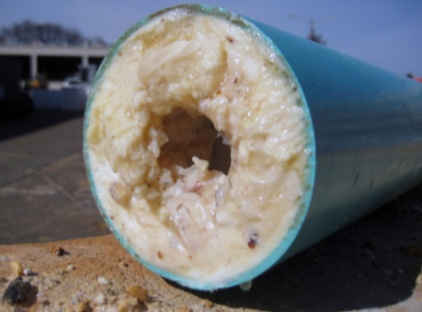
Undoing damage like this is a huge and expensive undertaking. And when FOGs (fats, oils and grease) build up over time you can end up with fatbergs that require months of repairs and millions of dollars of expense. This fatberg in London is an extreme example. It caused millions of pounds in damages.
And if a restaurant doesn’t recycle its cooking oil and simply washes it down the sink, clogged pipes can severely damage a restaurant and its reputation, not to mention the fines and citations that will come from its local health department or EPA.
That grease can make its way into municipal water systems, which are not designed to process grease. Once grease gets into a municipal water system it can foul waterways, killing animals, birds and waterfowl. UCO can also kill plant life by coating leaves and preventing photosynthesis as mentioned in this Mississippi River Delta study.
Composting in small amounts is deemed harmless by some experts but again, the oil is getting into the water system and can cause damage. Most experts such as those at SF Gate recommend against it because oil can make your compost pile anaerobic instead of aerobic.
Dumping used cooking oil is always a bad idea.
Used cooking oil is produced by cooking food in animal fats or vegetable oils and then depositing the oil into containers or bins. This might mean a thin layer of oil from a frying pan or the many gallons of oil used each day by a busy restaurant that does a lot of frying. Large bins outside of restaurants are storage bins for used cooking oil. They are usually made of metal or HDPE (High density polyethylene.) ReBirth Biofuels uses HDPE containers that look like this. You may have seen them around Baton Rouge.

We schedule used cooking oil pickups so you know when to expect us. An off schedule pickup or trap issue? You have the CEO’s cell phone number.
We provide cutting edge cooking oil management systems and they cost less than you’d think. You can prevent injuries and accidents and save on workman’s comp and insurance premiums. If you produce enough oil it makes perfect sense.
We do! You only have to make one call–to us! We are licensed grease trap cleaners in Louisiana.
Give us a call or fill out a form to learn more or get your restaurant oil removal service started as soon as you need it!
Contact Us